
This is a hard story. I am writing it because it’s important. A warning: a parakeet dies in this story — badly. I’m telling it so parakeets don’t die badly anymore. If you’re sensitive to this, just read up on the ethics of inaction; they are well described in other literature.
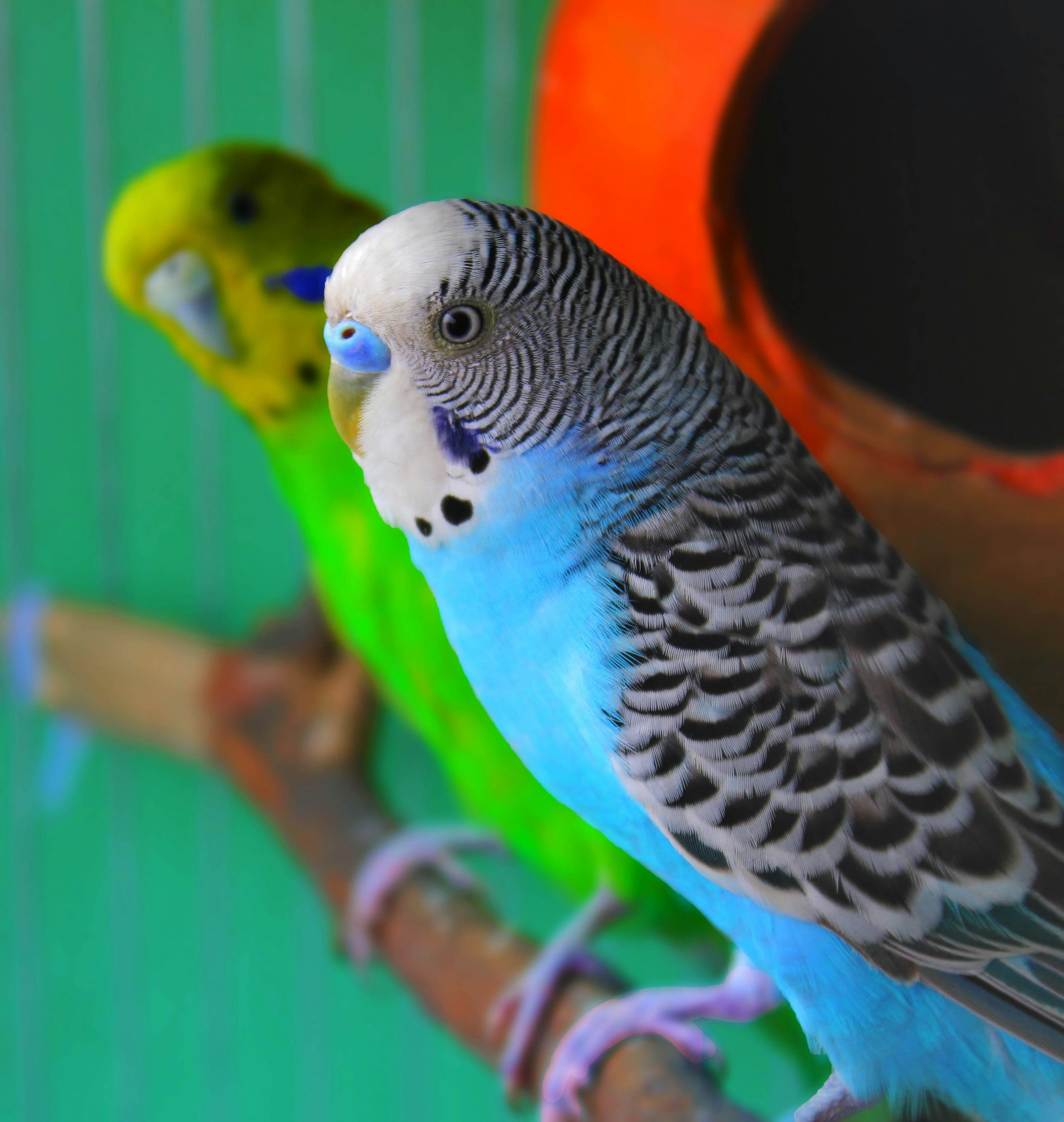
Yeah, it was a blue parakeet. I still can’t look at photos of parakeets easily.
Friendship and the ethics of inaction
I’m writing this story because I had a real fight, with a real friend, last year. I had a child sex trafficking case and chose to report it despite significant personal risk. It was scary. I was scared, and I called my friend when I was really afraid. I had been shaking for about two hours and couldn’t beat the fear. So I called a friend. And that’s how my friend knew about it.
In fact, I called a lot of friends during that period. A lot of responsible adults who had been a support network for me for years.
And half of them said not to report. They said I was too important to risk my life on a report like that. That they wouldn’t. They wouldn’t report and sometimes it wasn’t worth it.
And half of them said, of course you reported. There is literally nothing else you could have done. And it sucks, and we’re here for you.
One friend was really mad at me. They said they really didn’t believe that anyone is ever responsible for things they chose not to do. Inaction, they said, means no accountability. And they said I had other responsibilities and I couldn’t put my life at risk over something that wasn’t my problem. And that was a real disagreement, and I really lost a relationship over it.
Because I refused. Or rather, I chose not to share that position. And I don’t need people in my intimate space who truly hold it. It’s hard enough as it is to act; having people around you who tell you not to, or don’t help, is just too difficult.
The research on defiance and nonconformity runs roughly 35% → 9% → under 0.5%, as the cost of holding the line moves from awkwardness to death.
So I lost half of my friends over this, people I really like and respect in other ways, over this decision. We can still be friends, but we’re not intimate friends. And there is a difference, and it does suck. But life is long, and relationships evolve, and we’ll see what happens.
It’s just what happened for me at this age.
Why do I believe in the ethics of inaction?
I could call on my formal medical training for this. They hit doctors hard for this in training. Formally, in most programs with ethicists, but also in training when things happen. And if you don’t get tagged for it formally and it doesn’t get through, you handle far too many cases for something not to teach you hard if you have empathy about the things you “should have done”.
There is actually a lot of grief when in a position of power over other people, like a clinician. And most empathetic people privately agonize about decisions made under uncertainty that later become clearer, and you wonder if you made the right call and have to find a way to internally cope with that.
Some of us harden, try to shut the empathy off. Others explore it a lot and learn how and when to take responsibility. How to cope with mistakes.
Uncertainty and rapid decision-making come into play in emergency services. I’ve had discussions about this with international development folks, ER docs, paramedics, wildland firefighters, special forces, and sailboat captains. All of these fields require experienced rapid decision-makers.
You get good at it when there are real stakes. Your empathy forces you to; your profession holds you accountable. Reality bites. Some get depressed; some leave.
It sounds cool and smart. But you need to know where it came from. Doing this professionally is just how I practice the skill now. It’s definitely not where I learned it.
I learned it from the parakeet.
What happened to the parakeet?
My family wasn’t functional. First. I need to say that so you know I was young, in a really toxic system. Bowen’s family theory is really helpful for toxic systems, and I highly recommend it, not only for families but for toxic workplaces. I was the Hero in this system. Basically assigned the role of being responsible for achieving and justifying the system.
So briefly, I was 12 and the oldest child. There were 6 children in the house at that time. I was a parentified child and had the care of two extra children under 5 that we did daycare for. So, not a great situation. Probably we moved to another state later that year because of child services reports, but as a child you don’t really understand things like that.
A relative came to the house and left a parakeet. The relative correctly interpreted the system as toxic, but their intervention was to leave a very cute, very well-trained, and very elaborately accessorized parakeet with my sister, who was 10 and two years younger than I was. She had the assigned role of the Angel in the system, responsible for nothing but being beloved by everyone.
I was probably a very controlling little kid, and an outsider might not have understood why, so they were probably just trying to restore balance. But the end result is I was forbidden to have anything to do with the parakeet. The parakeet was only my sister's to feed and care for, and she got special 1:1 training and special treatment and the special role of ‘parakeet owner’.
The relative was asked to leave, and there we were. Me at 12 — the actual caregiver in the household, my sister at 10 — just kind of a normal, if a bit underaccountable, kid, and the unfortunate parakeet. Let’s leave my parents out of this. They were morally accountable too, but that’s another story. In this story, they didn’t take care of anyone and were often out of the house. Who cares why. It just was.
This is about me and the parakeet.
So for a few months my sister did look after the parakeet. Then she lost interest, and the less appealing tasks started falling to me. So for a while I was allowed to clean the cage but not do the feeding. Then I was allowed to refill the water, but not go to the pet store.
Then she stopped doing anything. And the daily ritual of opening up the cage cover and other things just didn’t happen. Or I’d have to yell at her to do it because I wasn’t allowed to. And she got more and more grudging about me telling her what to do.
Like normal siblings, but not in a normal situation.
So this part is important: I was pissed.
I was 12. I wasn’t that mature, and I had been treated unjustly. Not only did I have to clean up the shit, but I didn’t get to go to the pet store, and I wasn’t allowed to take the parakeet out and let it walk around and actually play with it. All the fun stuff went to my sister, and all the actual work fell to me. So I was pissed.
And one day I just refused to do anything. I said fuck it, the parakeet is not my problem. These people are jerks; it’s their parakeet, fine. They can take care of it. And I mentally crossed my arms and just did NOTHING.
So there is the cage, the cover on, and there is chirping and indignant flapping from within the cage, and I just walked by the cage. I don’t remember for how long. But I remember at least two times quite clearly that I did that.
I didn’t open the cover. I didn’t tell my sister. I just did…
Nothing.
And when I finally opened the cage later, it was too late. The parakeet had starved in a house full of people. And I was the one who had to take the starved bird’s body from under the cover, the henpecked cage. I made a matchbox casket, and I buried the bird.
I wish I could say I consoled my sister, but I don’t think I did. I was horribly, horribly, horribly upset. I wish I could say that I didn’t tell her it was her fault, but I probably did. She was as upset and inconsolable as I was. I do remember that, although I think I was the one officially blamed. The setting and the setup were so far out of proportion to the actual consequence. And we were both old enough to accurately perceive the real consequence. The actual consequence was truly gut-wrenchingly horrible.
I wish I could tell you properly about that feeling so you never, never feel it. I felt the horrible starvation death of that parakeet in my soul. And no one else was in that feeling. No one could absolve me from it, or console me with it.
There were all these other complicit, accountable, and responsible people around me who had seemed to fail in small and meaningless ways. It was as if they conspired to trap me in this consequence. The temptation was to rage, pass blame, and explain it away. Certainly, my mind gnawed at this problem for years afterward. But facing the outcome directly, it really wasn’t on the table. Over the years, they all dropped out of the story. Because I was the one who had to go on living with the irrevocable consequence. My Indigenous friends say time is testimony. And with time, it clarified.
It was totally, completely between the parakeet and me.
What I learned about the ethics of inaction
So I will tell you what I learned.
I learned it doesn’t matter if it’s fair. It doesn’t matter who else is involved and how they set up the story. These things happen in the cracks of society, groups, institutions, and procedures. We’re often just the bystanders, always just a little bit easier not to lift the cover and look inside the cage.
It doesn’t matter what they do.
When I really learned the ethics of inaction, it was between me and me. When I finally got it, doctor training didn’t teach me anything I didn’t already know. Nor can it replace that reckoning.
And I can truly say I learned my lesson.
How I applied what I learned
This experience changed a lot of things about my life.
I’ve always been into wild animals in adulthood. My personal conclusion was that the cage itself was wrong. The parakeet would have fed itself if it hadn’t been in a cage. I prefer wild animals and take a lot of joy in watching wild birds. I don’t believe in exotic pets or animal trafficking. The entire supply chain that put the parakeet in the cage in our house, I decided I didn’t want to invest in.
I work a lot on biodiversity; we do ecotourism at Savimbo so people can see birds in the wild with guides. Which is a cooler way to meet foreign and exotic birds.
I worked as a doctor, firefighter, and paramedic. High-tech CEO now and lots of international development. This training and experience refined my feelings on this topic and gave me practice making ethical decisions in scenarios of uncertainty.
I have a panel of people I consult and trust who also have experience and rely a lot on feedback for different scenarios. Lately, that includes a lot of Indigenous elders and shamans, which is an extra dimension of deliberation I really enjoy. Their leadership training is different but very rich.
I pick up the odd human rights case; this month I’m at the UN Human Rights Commission for a rough mining case that came across my desk last year. I learned various reporting and enforcement protocols; there is a system for this kind of shit ‚— when it’s bigger than a parakeet.
I work a lot in climate, where ethics of inaction get a lot of people because nature and the planet are a real area of tough collective inaction. Mark Carney and his speech at Lloyd’s in 2015 was a great summary of this with a real effect. I like the work of PIK Potsdam Climate Institute on that. It’s clear, informative, and action-oriented. Empowering stuff.
But I’m telling you this story and how it affected me for a reason.
I hope you will learn from my story. So you never have to learn the ethics of inaction the hard way. You can learn from experience, or you can learn from love. And sometimes when you see high-functioning people, its easy to misunderstand the cost they paid for that function.
So I’m sharing my real story, not the Trendsetter one, out of love.